Battery Recycling That Keeps Pace With Modern Demand
As battery use continues to grow, so does the need for responsible recycling.

Commonly Recycled Batteries
This list is not exhaustive—items with similar characteristics may also be accepted. For questions about specific items, please contact our customer support team at 888.657.5267.

BAT-ALK
Alkaline - cells: D,C, AA, AAA, 9V, button
BAT-LI
Li-ion, laptop, cell phone, power tool
BAT-LP
Li-primary (non rechargeable) - cells: D,C, AA, AAA, 9V, button
BAT-DLP
Lithium (Li-ion / Li-primary) damaged, burned
BAT-LI-TCL
Lithium thionyl chloride (Li-SOCl2) - industrial battery-powered
BAT-LI-BUT
Lithium button cell batteries
BAT-MIX
Mixed - Alk, NiCad, NiMH, Pb, etc. (excludes Li-ion)
BAT-PB
Lead-acid - sealed, auto, steel cased, industrial
BAT-DPB
Lead-acid - sealed, auto, steel cased, industrial - damaged, burned
BAT-NiCad
Nickel-cadmium (dry cell), sealed cells & power-packs
BAT-WNiCad
Nickel-cadmium (wet cell), industrial, vented cells, includes Alcad & Ni-Fe
BAT-NiMH
Nickel-metal hydride, (rechargeable) sealed cells & power-packs
BAT-DNiCad
Nickel-cadmium (dry cell), sealed cells & power-packs - damaged, burned
Comprehensive battery recycling services.
From smartphones and laptops to cordless tools, gaming devices, and backup systems in hardwired electronics—batteries power nearly everything around us. But many contain hazardous materials and are regulated as universal waste.

Lithium from recycled batteries can be reused in electric vehicles, solar storage, and new consumer electronics.

Battery recycling helps keep harmful metals like mercury, cadmium, and lead out of soil and drinking water.

Nearly 99% of a lead-acid battery can be recycled, making it one of the most recycled products in the world.

Tossing batteries in the trash can cause fires—recycling keeps your home, trucks, and facilities safe.
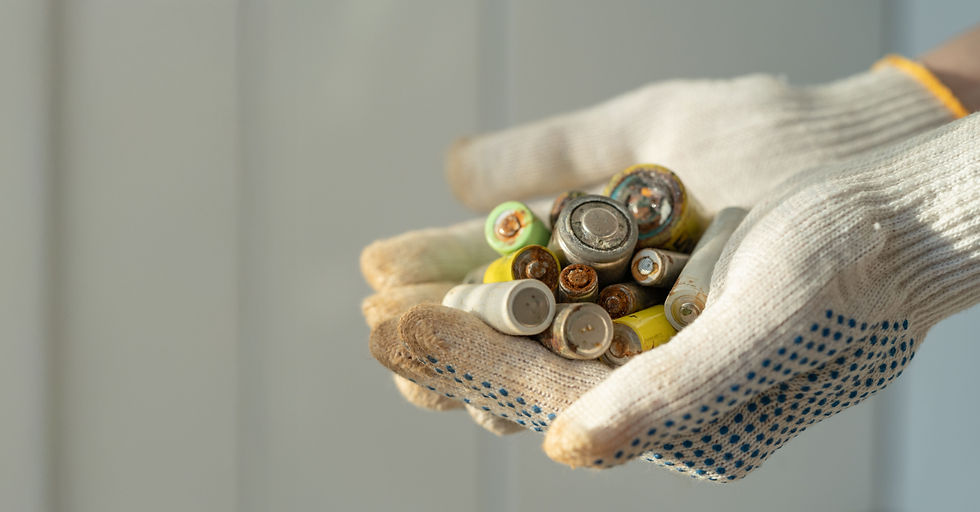
Batteries can be recycled into new batteries, stainless steel, and even road asphalt—nothing needs to go to waste!
We accept all major battery chemistries, including lead-acid, alkaline, lithium-ion (Li-Ion), lithium primary, nickel-cadmium (NiCad), nickel-metal hydride (NiMH), zinc-carbon, silver-oxide, mercury, and zinc-air. Battery terminals must be protected with tape, bagging, or original packaging to prevent short circuits and fire risk. Alkaline batteries do not require terminal protection unless mixed with other battery chemistries.
